Tech: Part Four: Choreography

Tech: Choreography


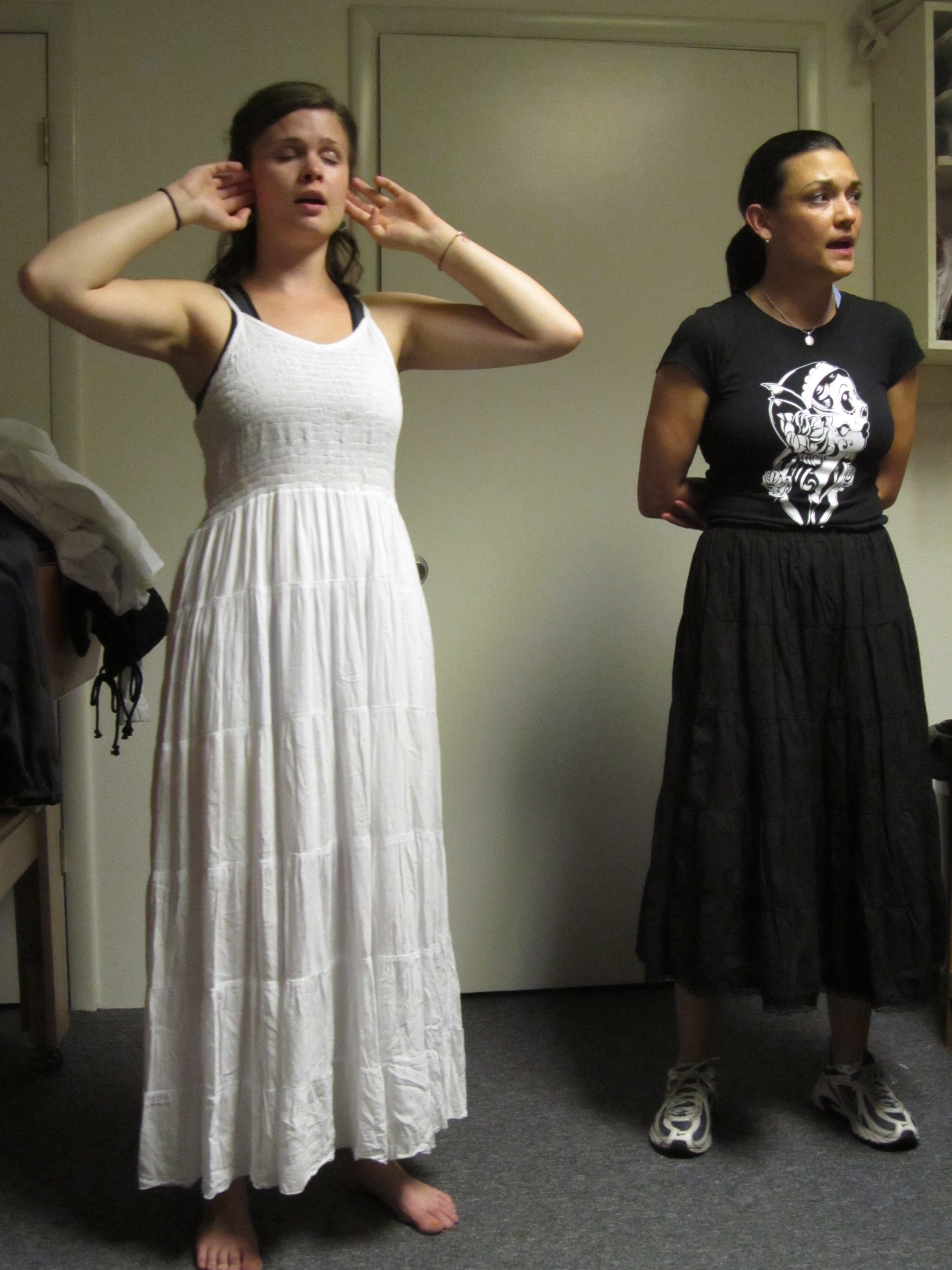
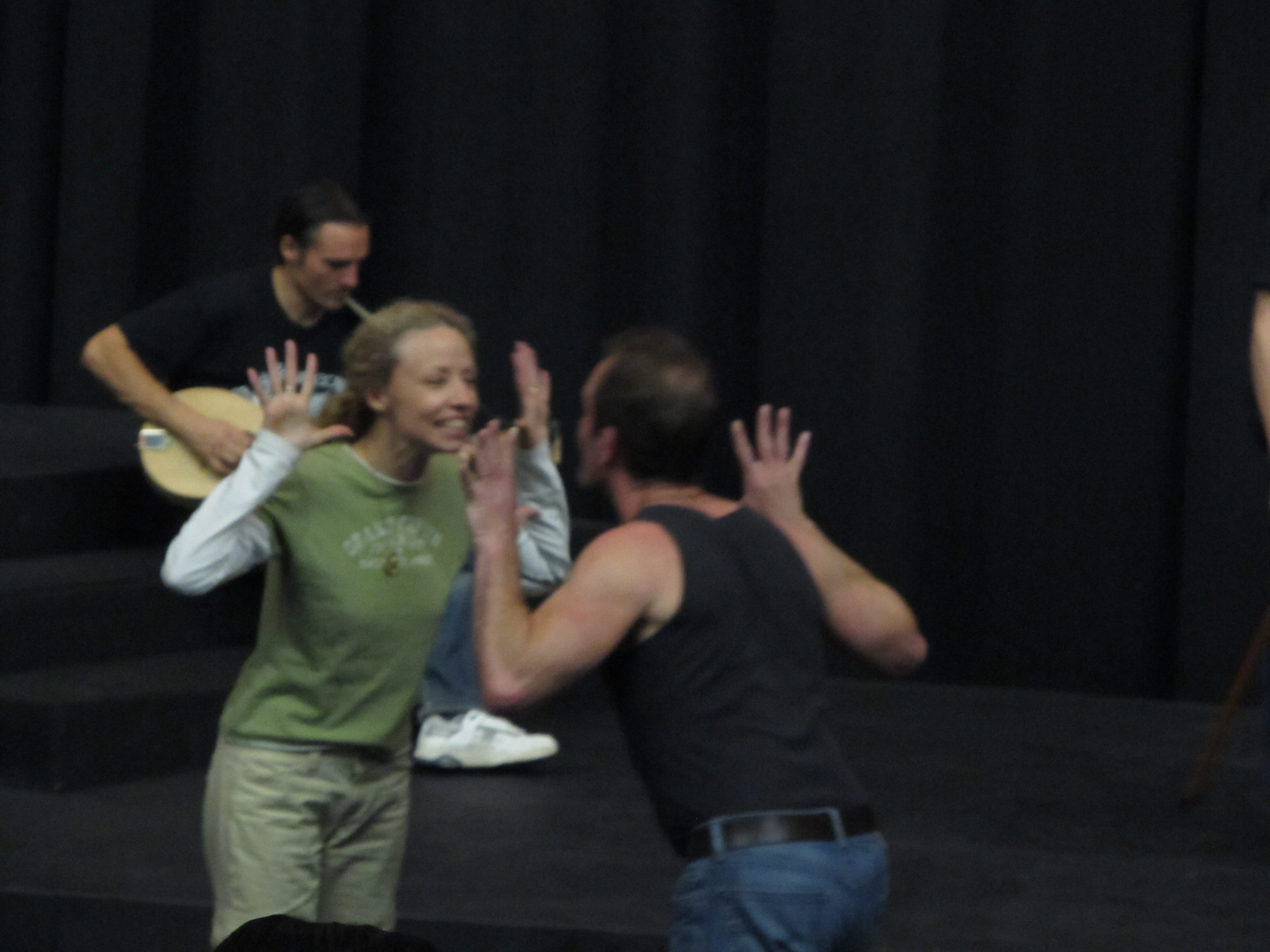
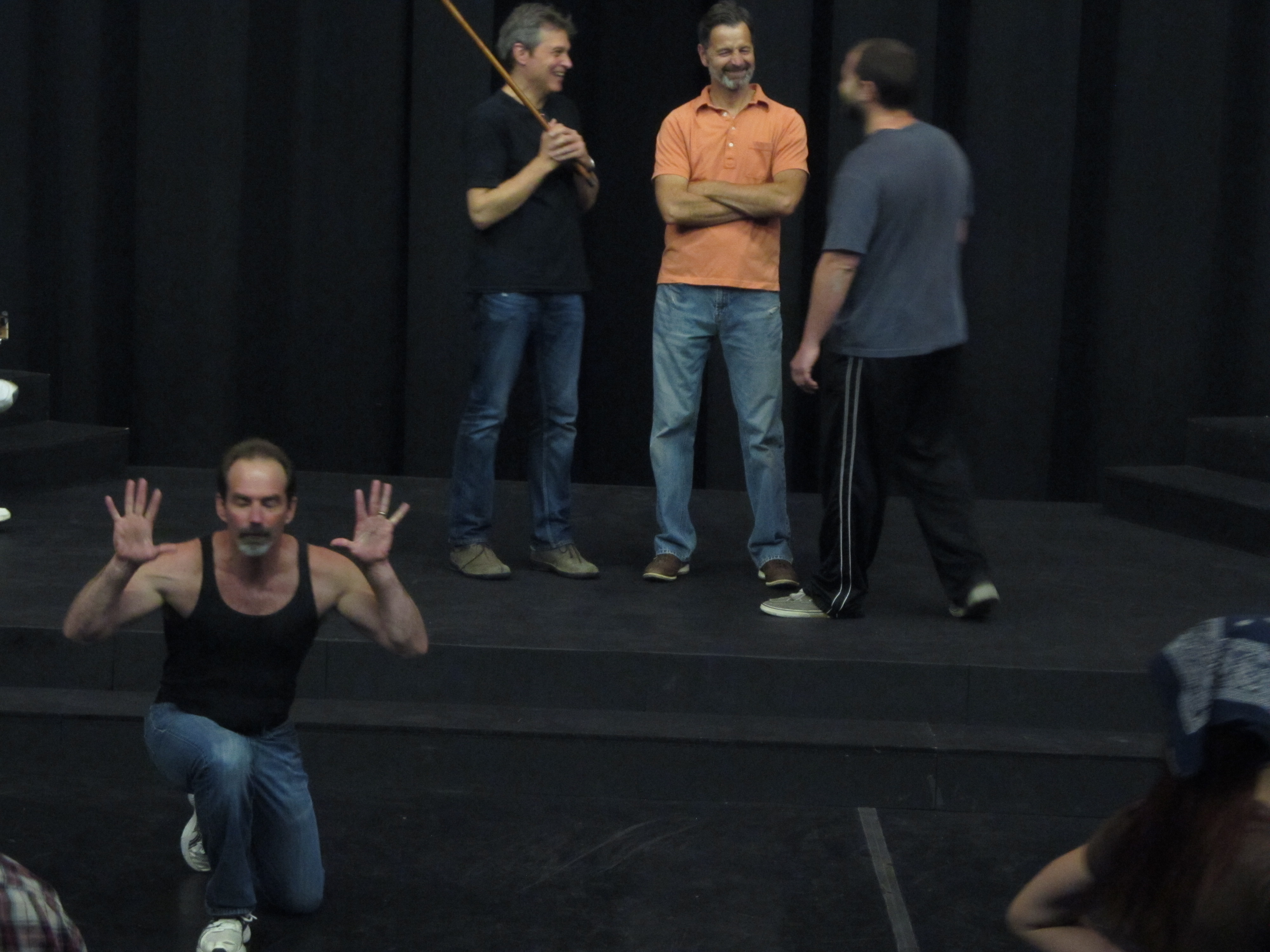
McKerrow and Gardner demonstrate a move described as “looking through the bushes.”

After giving the actors a final pointer, John Gardner moves across stage to get out of the way. But he doesn’t just walk; he leaps and twirls with the grace of a seasoned dancer.

Gardner and his wife, Amanda McKerrow, worked together to choreograph the four dances in The Winter’s Tale.

The couple met Joe McGrath, the Rogue Theatre’s artistic director, when he was Drosselmeyer in Ballet Tucson’s The Nutcracker. After becoming friends during their work at the Ballet, the pair saw a few shows at the Rogue.

“We really love what they’re doing here,” Gardner said.

They’d been wanting to collaborate with McGrath for a while when finally, about a year ago, Cynthia Meier and McGrath asked them to choreograph for the theatre. They’d worked before with a lot of ballet companies and some operas, but never for a production like this.

For The Winter’s Tale, “Cynthia had blocked out a lot of the beginning of the minuet and we just kind of filled it in,” McKerrow said. “The three other ones we did completely.”

The first dance is set in Sicilia while the other three occur in Bohemia. This distinction is evident in the style of the dances.

According to Gardner, “The minuet is very formal, period dance. They’re formal aristocratic dances.” McKerrow added that “it’s for people of higher stations; kings and queens. So there’s straight necks and upper bodies.”

The pastoral qualities of Bohemia reflect in the tone the dances set. “There is a certain ritualistic feeling to it,” McKerrow said. “Like a tradition.” But there’s much more fun to it. “They’re shepards,” McKerrow explained. “They get to be a little more free.”

Gardner described the first Bohemia dance as “more of a celebration, so it starts to be more free form.”

“It can be a little wild,” McKerrow said with a laugh. “And speaking of wild, the third dance is pretty wild.”

The satyr dance.

One of the most humorous parts of the play, it features most of the male cast prancing around on stage making comically suggestive poses and noises. “It’s men displaying their virility,” Gardner said. “So it’s suggestive to that. It should be funny without being explicit.”

The long-nosed masks used as props in this scene add to the humor. “It’s a celebration of male potency, McKerrow added. “Just men celebrating being men.”

The most challenging aspect of this experience was the time. They had conflicting schedules and the fact that Gardner and McKerrow don’t live in Tucson only complicated matters.

“But it’s been great collaborating with Paul,” Gardner said. “He likes to improvise a lot but we met in the middle to figure out a sort of structure.”

They were working against the deadline of an opening night. But the time factor wasn’t as significant as they’d feared. “They all take direction so well,” McKerrow said.

“And Cynthia was so specific in what she wanted,” Gardner said. According to him, as long as you know what you want to say, coming up with the choreography is easier. “Cynthia was very clear.”

Though they’ve devoted their whole careers to dance, McKerrow said she would still like to learn about the more vocally focused profession of acting.

“I was too shy to use my voice. Dance appealed to me as a way to express myself without my voice,” she said. “It’s really been fun seeing not just the differences but the similarities in what we do,” McKerrow said. “It’s great, it’s always good to learn.”
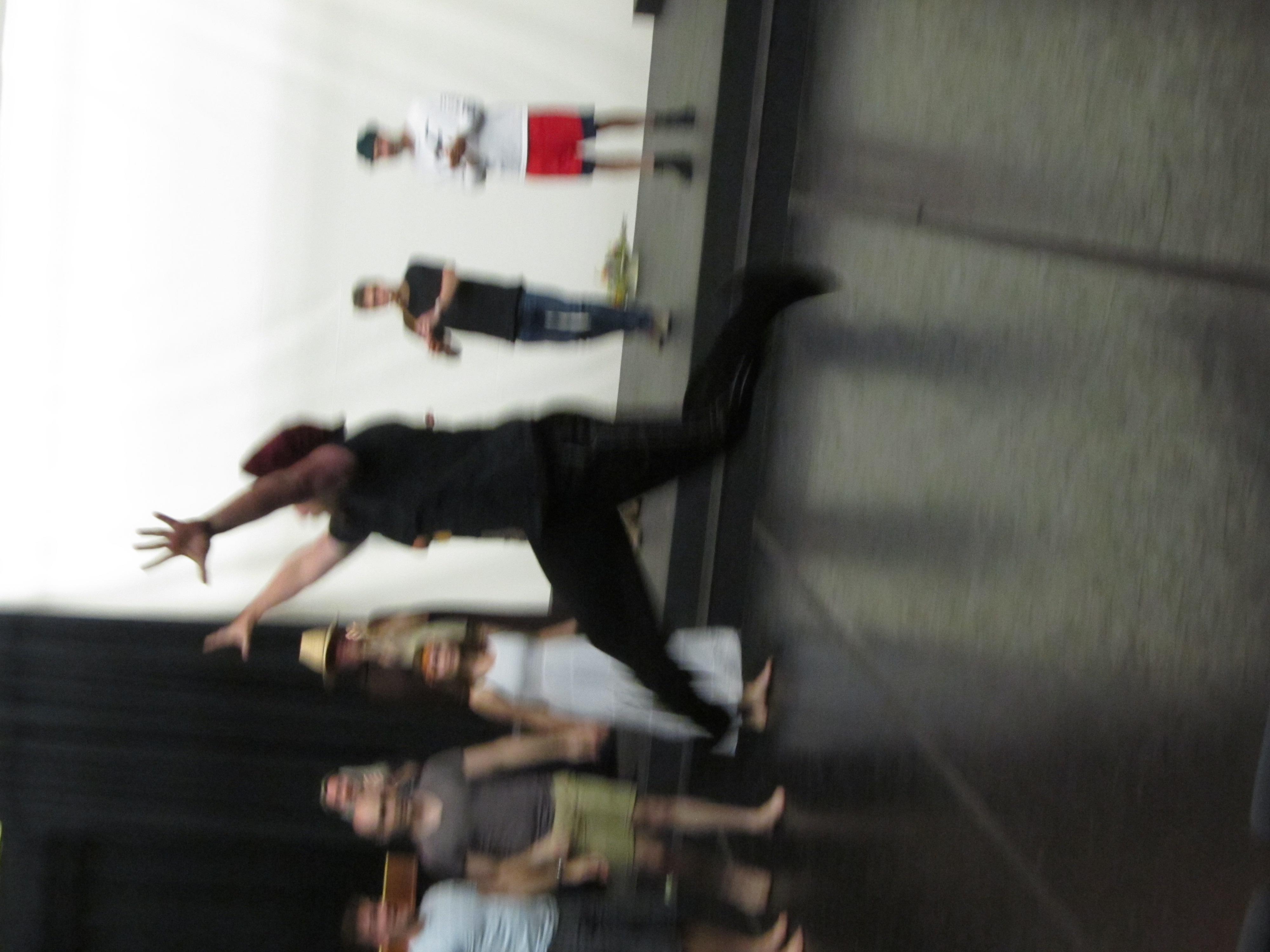
Matt Walley leaps across the stage during a dance in Bohemia.
Q & A: Steve McKee and Dylan Page

How did you first get involved in theatre?

Page: I have been interested in acting for most of my life, but I didn’t get serious about theater until my Junior year of high school.  I was in a production of Come Back to the Five and Dime Jimmy Dean at Tucson High School and I fell in love with the whole process.

Why acting?

McKee: It’s a great way to be creative.

Are there qualities in your character that you also see in yourself?

McKee: He’s good and noble and always sees the positive side of things.

Page: There are a lot of actors who I respect a great deal, but two that I really admire are Meryl Streep and Natalie Portman.

Do you have any actors or actresses you admire?

McKee: Christopher Guest, Hank Azzaria

What is your favorite previous role?
Page: This past year I played two roles that really solidified my passion for theater.  The first was Evelyn in The Shape of Things with the Arizona Repertory Theatre at the U of A  and the second was Dewey Dell in As I Lay Dying at The Rogue Theater.  The first because of the challenge it posed for me as an actor, and as a person, and the second because of the beauty and complexity of Faulkner’s characters and language.

What are you most excited about for in this play?

McKee: Rogue Theatre does great quality work.  You can tell everyone rises to the best of their abilities.

Page: This play is so epic, and so many things happen.  We get to dance, sing, and operate a massive puppet all in the course of a two hour production and I think I am most excited for those things.

Tech: Part Three: Puppets

Part Three: Puppets

Matt Cotten, of Puppets Amongus, designed the giant bear puppet that will unfortunately bring about Antigonus’s end.

The puppet is manned by four actors; Marissa Garcia, Dylan Page, Lee Rayment, and Christopher Johnson. Page and Garcia each handle a paw. Rayment is strapped into a structure that holds up the head while Johnson supports him.

This slideshow requires JavaScript.

Chris Koval ~ Dion & others

Chris Koval, Dion & others

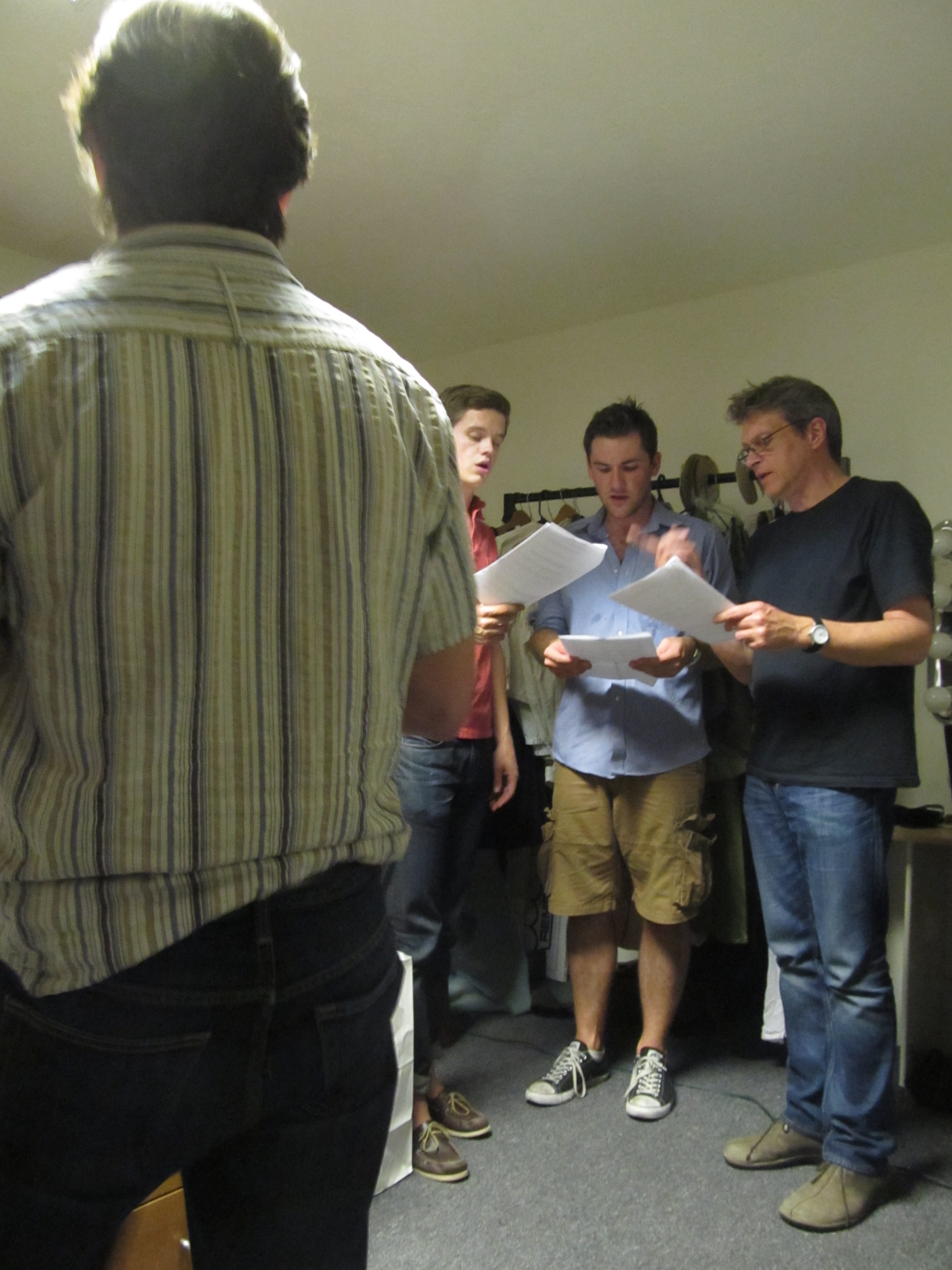
Chris received his B.A in theater at Kent State University. He continued his conservatory training in San Francisco at The Bennett Theatre Lab, and is currently Assistant Instructor to Philip Bennett here in Tucson, as well as the drama teacher at Catalina High School. Some of his San Francisco credits include, A Midsummer Night’s DreamCabaretDinner With FriendsBobby Gould in HellFall Out on Turk Street, and It’s a ‘Miserable’ Life. As a member of California Desert Regional Theatre, he performed John Brown’s Body and Lone Star. New to the area, he has recently performed with C.A.S.T (Clean and Sober Theater), a youth outreach program of Cope Mental Health Clinic, as well as Tucson Theatrical Mime Troup. This is Chris’ first production at The Rogue.

John Gardner ~ Choreographer

John Gardner, Choreographer

John has distinguished himself in two major dance companies, American Ballet Theatre and White Oak Dance Project. He joined American Ballet Theatre in 1978, and was promoted to the rank of soloist in 1984. Mr. Gardner’s diverse repertoire included many soloist and principal roles, which represented an extensive range of styles, and afforded him the opportunity to work with many of the master choreographers of the twentieth century. Mr. Gardner is currently a repetiteur for the Antony Tudor Trust, and together with his wife Amanda McKerrow stages many of the Antony Tudor ballets around the world. During the course of his career, Mr. Gardner has achieved an excellent reputation as a master teacher and coach for ballet on both the professional and student levels, and has choreographed and staged numerous ballets for companies and schools around the world.

Amanda McKerrow ~ Choreographer

Amanda McKerrow, Choreographer

Amanda has the honor of being the first American to receive a gold medal at the International Ballet Competition in Moscow in 1981. Since then she has been a recipient of numerous other awards, including the Princess Grace Dance Fellowship. Ms. Mckerrow joined American Ballet Theatre under the direction of Mikhail Baryshnikov in 1982, was appointed to the rank of soloist in 1983, and became a principal dancer in 1987. She danced leading roles in the major classics, and had numerous works created for her by many of the great choreographers of the twentieth century. She has also appeared as a guest artist throughout the world. Ms. McKerrow is a trustee for the Antony Tudor Trust, and together with her husband John Gardner stages many of the Antony Tudor ballets around the world. Ms. McKerrow is also in demand as a master teacher for both students and professional dancers.

Q & A: David Morden

How did you first get involved in theatre?

My first introduction to theatre was doing church plays as a boy.  I took drama classes in junior high and and high school.  In college, I realized that I was spending all of my free time at the theatre department and decided to commit to acting as a career.

Why acting?

Why acting” is the big, big question.  I think I like that form of communication above all others:  acting out a story so that an audience gets a vicarious experience of something out of the ordinary.

Can you tell me an interesting or amusing theatre story?

I could tell you a million!  Most theatre stories revolve around something going wrong and how one got out of the situation.  I once did an avant-garde play in Seattle–a series of monologues with two other actors.  At one point during the show, an audience member stood up, walked out of the theatre, came back and announced from the front of the stage, “The is the worst show I have ever seen in my life” and then left!

Do you have any actors/actresses you admire?

I usually admire British actors over American actors, because they have better training in classical theatre in Britain.  My favorites include Simon Russell Beale, Alan Rickman, Helen Mirren and Alan Rickman.
What is your favorite previous role? Do you have a dream role?

My favorite role is the one I just did for The Rogue:  Louis De Rougemont in SHIPWRECKED.  My dream role used to be the title role in Shakespeare’s RICHARD II — but now I’m too old to play the part!  Anything in Shakespeare is a dream role for me, but I suppose Elyot in PRIVATE LIVES would be high on my list, too!

Are there qualities in your character that you also see in yourself?

Always – though I would state it differently.  I always find the qualities in myself that work for the character.  We all have qualities such as love, jealousy, caring, anger, etc. inside of us.  As actors, it is our job to call them forth and explore them.

What are you most excited about for in this play?

This play has one of the most beautiful reunion scenes at the end of the play, when everything that was lost is found again.  If we do our job correctly, our audiences will be deeply moved by it and will leave the theatre thinking about those people that they love and can’t afford to lose.


Tech: Part Two: Music

Part Two: Music

The Winter’s Tale is set in two different worlds. The Sicilian part of the play is courtly and structured. The Bohemian part is freeform, pastoral and pagan.

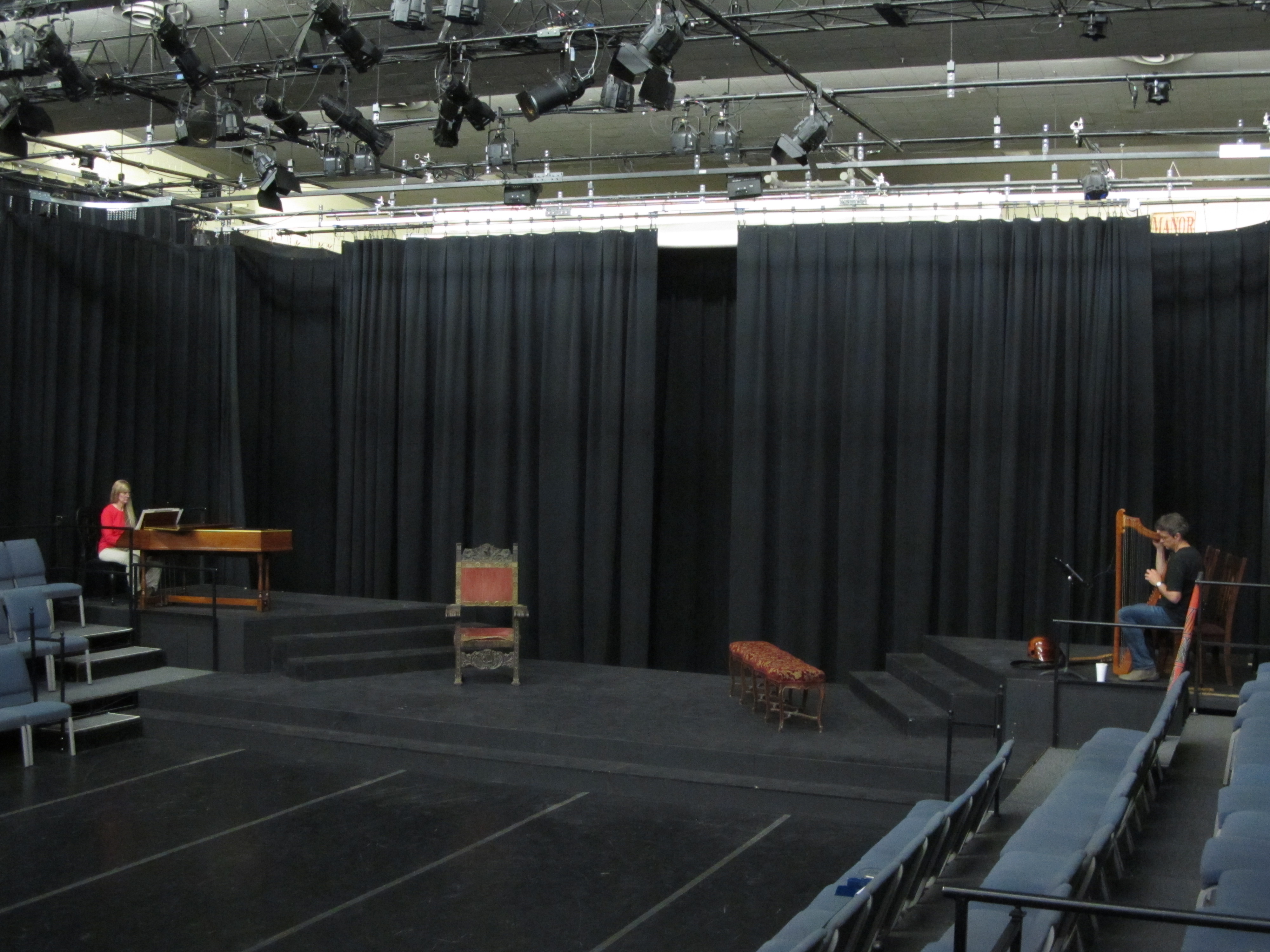
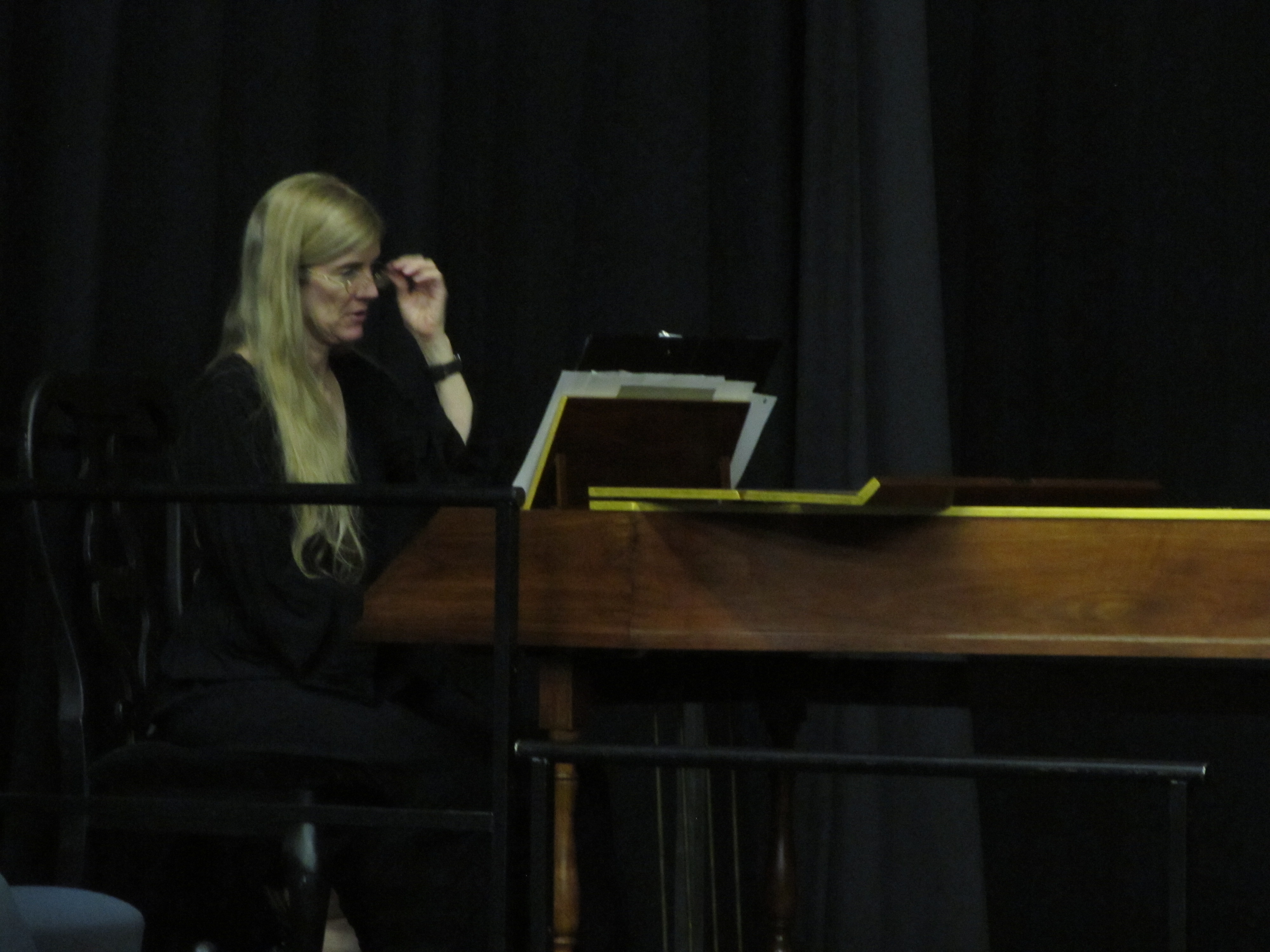
To emphasize this difference, Meier split the musical direction in two. Dawn Sellers will design the Sicilian portion, using harpsichord. Paul Amiel will employ harps and flutes for Bohemia.

“I thought it was a very good artistic decision,” Amiel said. “We’re two different people with two different backgrounds so there’s no way the two different places are going to sound the same.”

Amiel is a full time teacher at the University of Arizona’s Center for English as a Second Language. Though he has a strong passion for music, he hasn’t made it his profession. Having it as just a hobby gives him some flexibility to explore and experiment. Currently, he’s learning to play the accordion.

“I’m mainly interested in instruments that have a bigger meaning or purpose than entertaining. Music that functions as something other than making you tap your foot,” Amiel said.

After studying the text, he decided to base his sound on Bulgarian music. Then came the research; becoming familiar with the arrangements, rhythms, and patterns in Bulgarian music.

It’s like learning a language,” Amiel said.

Next, he’ll study the script again, picking out places that need music. Some are obvious; when Shakespeare calls for a song. Some are technical; long set changes or transitions. Some are artistic; Meier wants a monologue by Time to be sung.

Amiel says that the requirements form “a mental grid that you poor into your head and then you just wait for some inspiration.”

Flexibility is a key factor for theatre musicians. “I get to be a co-creator,” Amiel said. “Just the same way that actors don’t say the lines the same way every night, I get to play it differently every night. We start to listen to each other and we start to have a relationship.”

Though Amiel spends entire performances on stage in the face of the audience, afterwards, they rarely recognize him. For him, success is when he’s not noticeable. “It’s like oxygen. You don’t think about it when you’re breathing but if it were gone it’d be a problem. I want the music to be like that.”

Click To Listen To Music Samples

Dawn Sellers first met Cynthia Meier when she was writing a play. Meier discovered that Sellers had an extensive musical background that began when she was a young child playing for her church. Sellers has been working with the Rogue for three years.

“I love images with music. I love words and the combination of using those together is like my dream situation. I love the fact that they use acoustic music all the way through.” Sellers said.

For Sellers, the first step is so sit down with the director to learn about her concept of the play. Sometimes she gets a description of a feeling, sometimes an image, sometimes a particular sound. Sellers works off that and comes back to present the director with ideas to choose from.

I sit down with the director and ask her what her concept of the piece is, of the play. She’ll give me general comments of the feel or some kind of image or a particular kind of sound bu nothing really specific . then I’ll come back and present some ideas and she choses from them. So that’s always the key. Kinf od unserdatning what they want with what they say and bringing something that fits the mood and character off the piece.

“The key is understanding what they want with what they say,” Sellers said. “It’s bringing something that fits the mood and character of the piece.”


Q & A: Matt Waley, Philip Bennet

How did you first get involved in theatre?

Bennet: I have always wanted to be an actor.  At four years old I made a little puppet theatre and cut out photos from the newspaper to use as marionettes.  At six I had my first experience on the stage which was inspiring and transformative.

Waley: I had just quit the football team in HS because my knee was bothering me. My mom thought I should try out for the play because I was outgoing. I finally decided to audition and got the lead role of Joe Ferone in Up The Down Staircase.

Can you tell me an interesting or amusing theatre story?

Waley: I missed a cue in my first play at Live Theatre Workshop in 2002. I was playing Silvius in As You Like It. I missed that cue because I was telling people backstage what my favorite karaoke song was… Fat Bottomed Girls by Queen. I was absolutely mortified. Luckily my ensemble covered well. But, I have never missed a cue since (I refuse to talk backstage) and I have not karaoked since either.

Bennet: I had been acting for about 4 years on Broadway in American Stanislavski Theatre Repertory Company.  We did about 6 plays a season and alternated the plays, sometimes twice daily:  I was so confused one evening that I went on stage at the opening of the play and couldn’t remember which play I was in.  I stood blank and completely lost for what seemed an eternity.  If it hadn’t of been for the maid in the scene who said my opening lines, perhaps I’d still be standing there.

Do you have any actors/actresses you admire?
Bennet: Yes, many.  I deeply admire actors who are true artists, who take the time it takes to develop their technique and who build solid characters, not just play themselves:
Merryl Streep, Glen Close, Johnny Depp, Derick Jacoby, Ian McKellen, etc.

Are there qualities in your character that you also see in yourself?

Waley: When I looked up academic studies on the character I am playing- clown- the only description I could find was “A country booby.” So, besides the fact that I live in the desert, yes.

Bennet:  I believe I would behave just as he does in trying to save the life of Perdita; although, I hope to get back home safely before any bear could eat me!

What are you most excited about for in this play?

Waley: Always- the people I get to work with.

Bennet: I think the acting is outstanding. The music, singing and dances are exhilarating and beautiful.

Tech: Part One: Lights

Part One: Lights

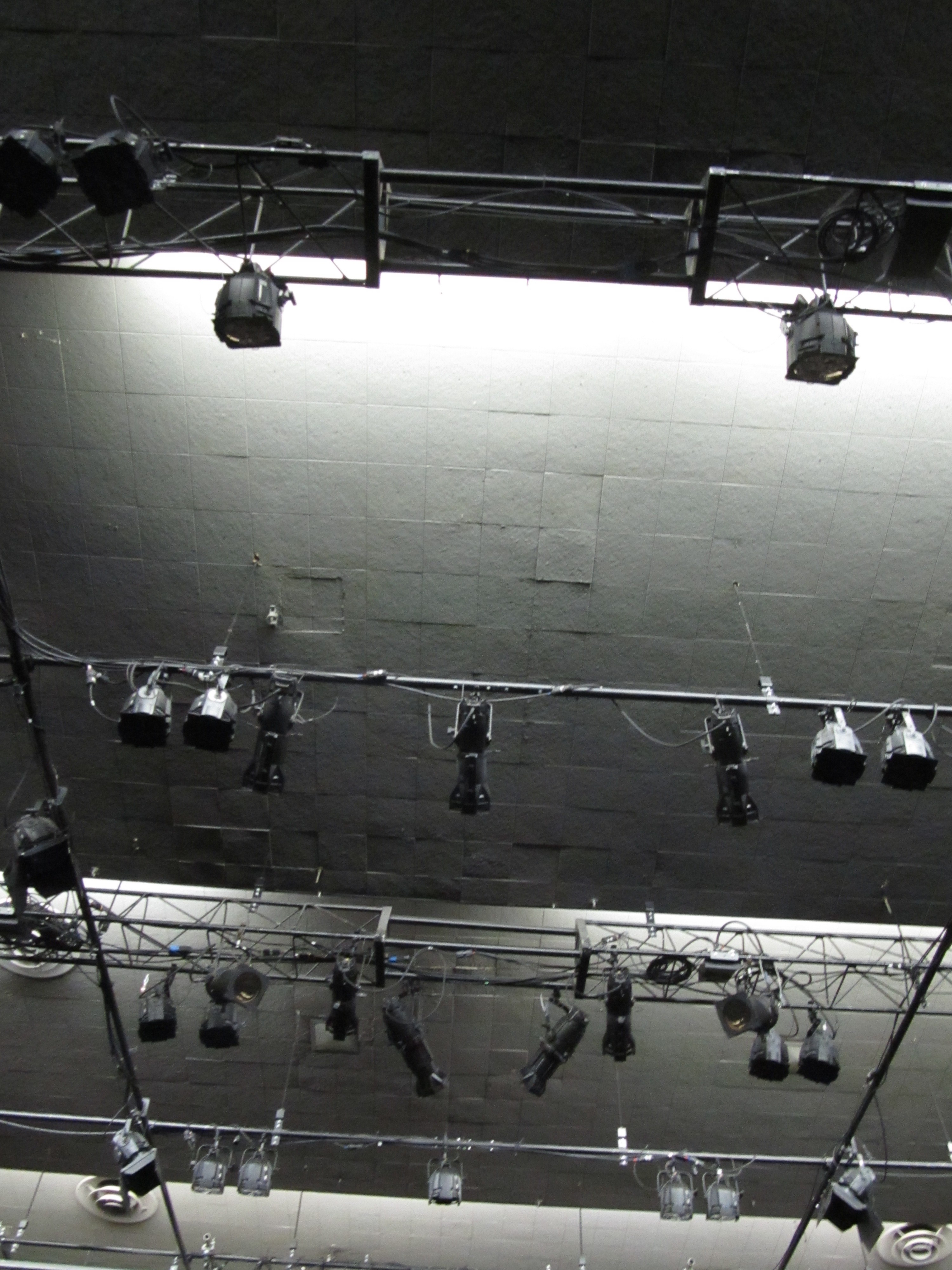
It is 10 p.m. Rehearsal is over, the actors are gone. But work for Clint Bryson is just beginning.

Though he designs and builds sets for the drama department at Catalina Foothills High School, Bryson is the lighting designer for The Winter’s Tale. He began in theatre as an actor, but he discovered a passion for working backstage in college.

Bryson admitted that he’s not adept in the graphic arts. “With painting, my hands just don’t work that way,” he said. Lighting is a good balance between the artistic and the technical. “It’s painting with light on a three dimensional black canvas.”

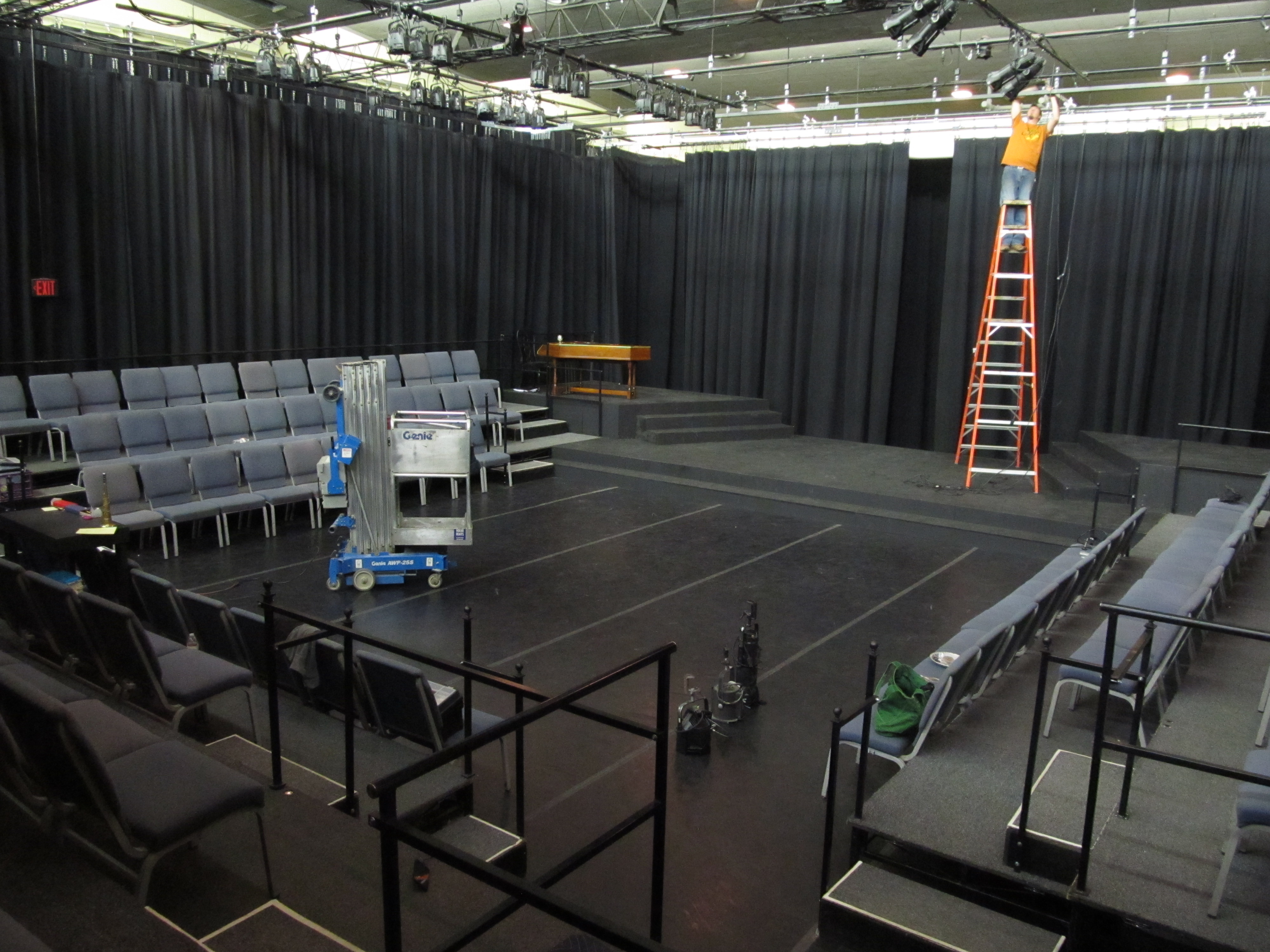
This evening, Bryson is hooking up the lights. The process takes about 8 hours, spread over a couple of days. “One of the fun challenges here is that every show is a different configuration,” Bryson said, referring to the theatre’s changing setup.

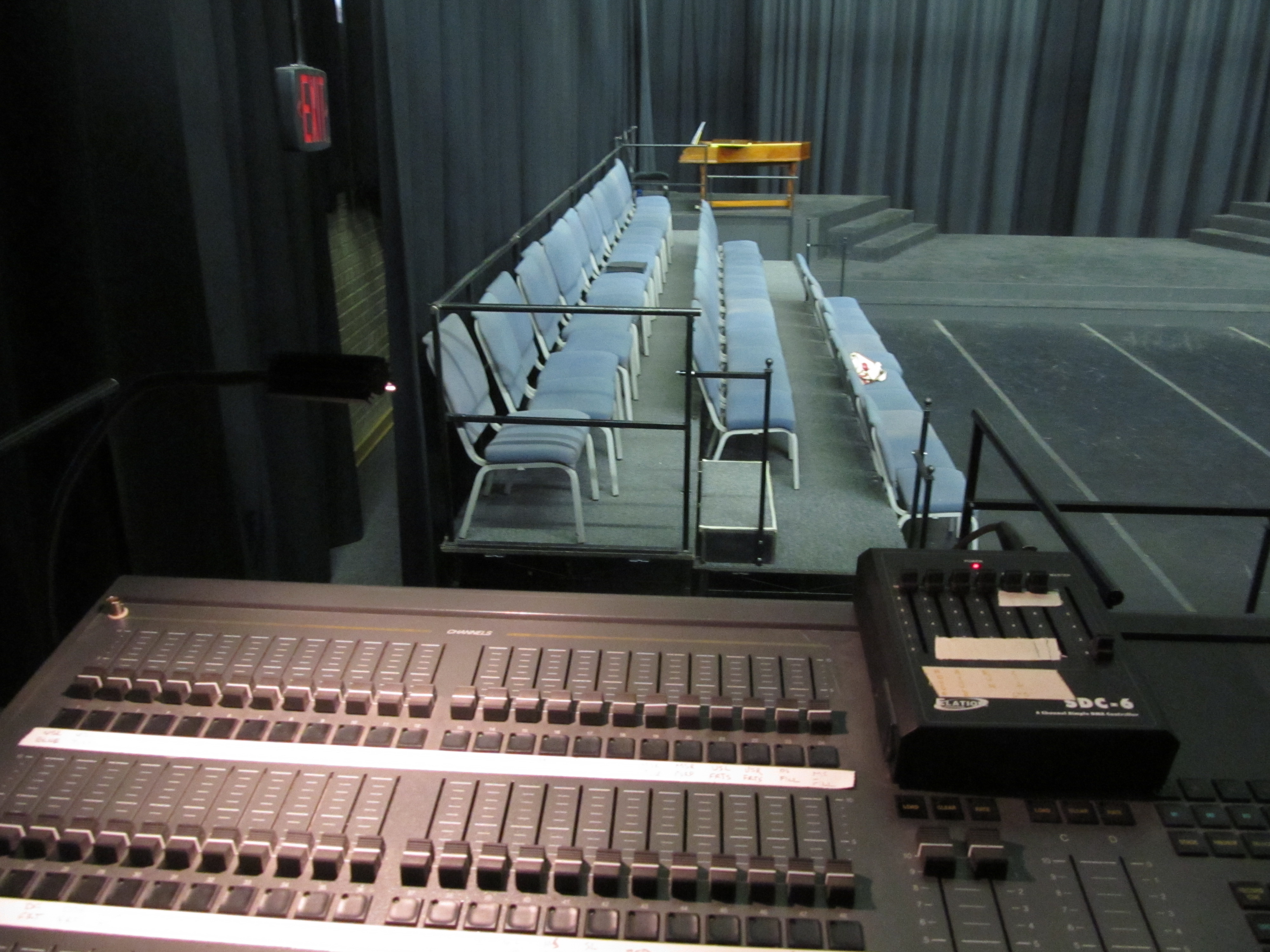
For Winter’s Tale, the stage is pushed back farther than normal, with two sections on either side for the musicians. There is a large section jutting out in the middle, the audience surrounding it on three sides. This means that Bryson must figure out how to treat all three sides equally.

There’s an old adage in the theatre that the lights are something that shouldn’t be noticed. They serve to enhance and support the play, not be the focus. The lights are essential in driving the emotion and energy people experience. “It’s a lot of fun to have that kind of manipulation of an audience,” he said.

He’s not the sole creative force behind the look of the lights. The process began with script consultation and style discussion with the director before he applied his knowledge. He typically watches one rehearsal near the end of the process to help make final lighting decisions.

The design process, according to Bryson is  “adding your artistic stamp and ideas to a collaborative group of people that have a vision for the show.”

As an example, he explained how music influences his decisions. Like lighting, it helps set the emotion in a scene. Hearing the music can help pinpoint the specific emotion underlying the moment.

He then turns to the small swatch books full of colors, searches through the subtleties for just the perfect color.

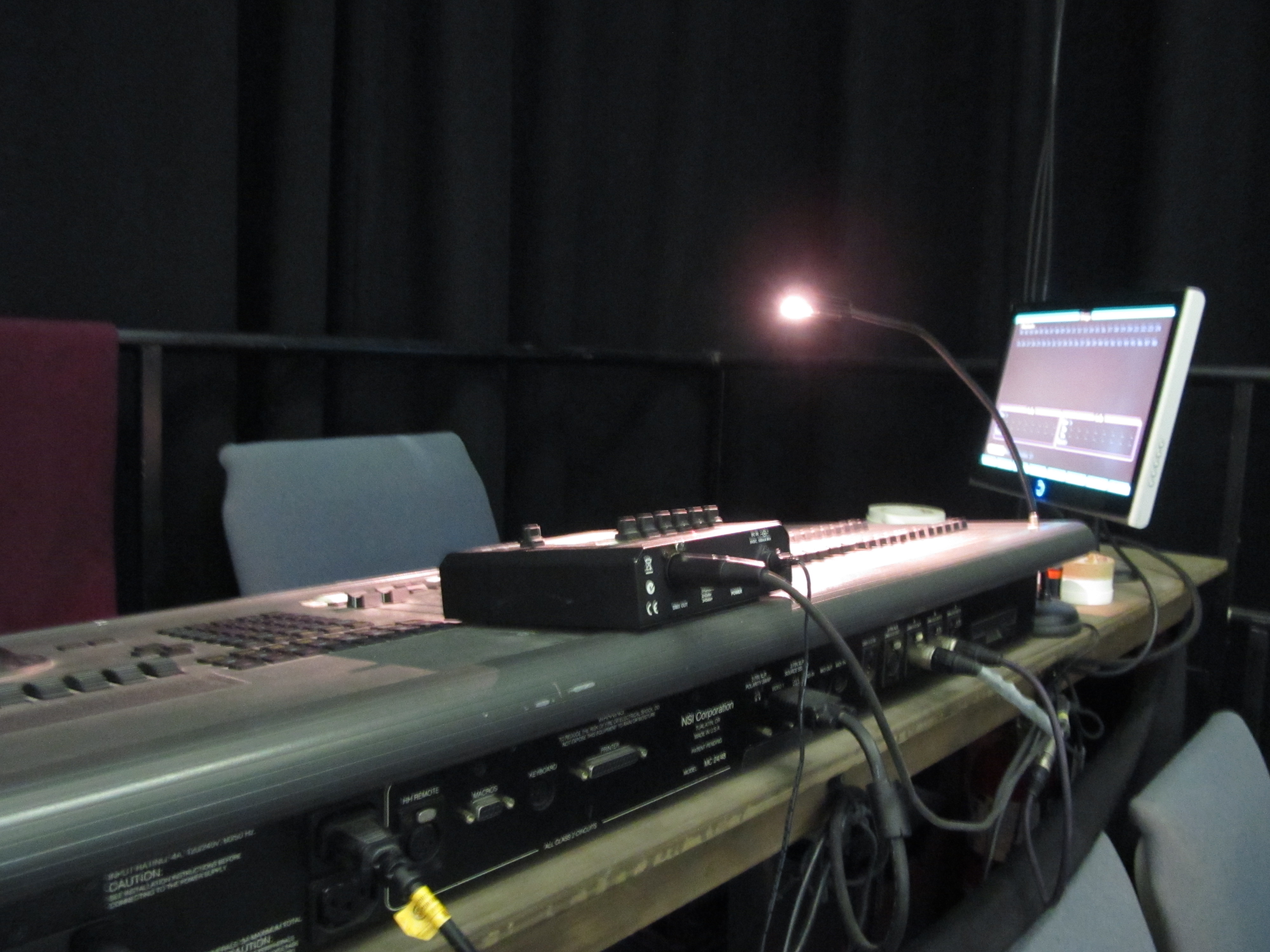
Though Bryson designed the lights, he won’t be running them for the show. The stage manager, Leah Taylor, will ensure the cues run smoothly during the performance.