The Director’s Vision

Image

TUCSON, Ariz – The long buffett table is loaded with Magpie’s pizza, salad and bottles of wine. A dessert table is covered with brownies, cookies and delicious cake pops. Chatter and laughter fill the house.

It is the Rogue Theatre’s traditional meal before the first read of a new play, in this case, The Winter’s Tale, which will open April 27. According to the show’s director, Cynthia Meier, it was cast last May, but this is the first gathering of all the actors and crew. Veteran Rogue actors greet one another with enthusiastic hugs, and new cast members get introduced.

“Time to eat! Time to eat!” Joe McGrath, the artistic director, announces but there is no mad rush for food. Conversations seem more engaging.

Relationships between actors are key, according to Meier, since they help character relationships on stage. This meal is the start of turning a cast of actors and actresses into a family. The practice began 3 years ago, after hearing of a similar even Chicago’s Lookingglass Theatre.

“Since putting on a play is such an exciting adventure, we thought starting with a meal together would be a kind of celebration,” Meier said. “We also have a big potluck party at the end of the play.”

At length, after everyone has eaten, Meier makes a toast. She said that though the play was written nearly 400 years ago, there is still something fresh and exciting about becoming one of the many artists to interpret the work.

For casting, physical appearance wasn’t as important as an actor’s ability to convey an understanding of Shakespeare’s words. She said the company looked at how well an actor could make the poetry live.

There is a flurry of activity as food is cleaned up and chairs are rearranged for the read through.

The actors sit shoulder to shoulder, pressed tightly together on stage. The tables in front of them are covered with scripts, Shakespeare lexicon books, pens, pencils, highlighters and water bottles.

McGrath urges the actors to not feel intimidated by the un-traditional circumstances of this first-read environment. Normally these rehearsals aren’t attended by outside supporters – in this case, members of the Rogue Theatre Company board.

Meier takes her seat close to the stage. The lights dim. The stage manager, Leah Taylor, reads the stage directions. The play begins.

The cast seems at ease. The synchronized turning of pages is sometimes interrupted by laughter. Some make small hand gestures and lean across the long table to direct their dialogue. Pieces of the characters’ personalities come through and the distinct Shakespearean cadance can be heard.

Even in this early first read there is a sense of the differences between these two worlds. The events at the palace are serious while the scene with the shepard are light and amusing, elliciting laughs from everyone.

Another moment that gains a few chuckles is when one of Shakespeare’s most famous stage directions is read:

[Exit, pursued by a bear.]

Matt Cotten, a puppet designer who worked with the theatre in the past will design a giant puppet to be the bear. Backstage, some of Cotton’s previous work hang from the ceiling behind the large black stage curtains. Above Meier’s head, massive puppets loomed much larger and more threatening than one might expect.

To gain a better understanding of the play, Meier spoke with Professor Fred Kiefer, a Shakespeare scholar at the University of Arizona. She read the text many times and even watched a few productions on video.

Meier plans on staying faithful to the original text. “Many productions tend to put a Shakespeare play somewhere different – put it on the moon.” She said. “We want to look at what’s in the text and the world Shakespeare created.  We’re trying to render Shakespeare’s poetry as beautifully and faithfully as possible.”

Despite all of the reading, research, and thought, where the emphasis will fall on the play’s themes is still up in the air. “Nothing really happens until we get the cast in the room together.” Meier said. “Things emerge that I don’t even know were there.”

However, one important idea is that this play is the ultimate wish fulfillment. At the end of the play, Leontes’ wife comes back to life. “All of us that have lost a loved one can understand yearning for resurrection.” Meier said.

The Winter’s Tale isn’t a popular or widely performed Shakespeare play but there’s a richness to the text, a certain maturity that Shakespeare brings to one of his last plays that spurred The Rogue to choose this for production. They want to be thought provoking, to have material for discussion and the complexity of the plot and the interesting journey is one that invokes questions of who’s justified, who’s not, who’s the villain, who’s the hero.

“It’s not a clearcut comedy, tragedy, or history.” Meier said. “It’s a combination of all the elements and that separates it from other shows.”


The Winter’s Tale

TUCSON, Ariz – Professor Fred Kiefer was out of breath when he reached his office on the fourth floor of the Modern Languages building. Arms laden with books he paused at his office door to unlock it, casting a glance over his shoulder.

Kiefer is a professor of Shakespeare and Renaissance drama at the University of Arizona. Sitting in his office, framed by two desks covered in stacks of books and papers, Kiefer spoke about how he came to work with The Winter’s Tale director, Cynthia Meier.

Patrick Baliani, a fellow professor at UA, has an ongoing relationship with The Rogue Theatre and suggested Meier speak with Kiefer about The Winter’s Tale.

“At it’s most basic, it’s about a king who early in the play goes mad. As a result, his young son dies and his wife apparently dies, although she doesn’t really,” Kiefer explained. “At the end, the husband and wife are reunited, and they’re reunited with their daughter, whom the wife hasn’t seen in 16 years.”

Kiefer said he emphasized one thing in particular when he spoke to Meier: the play has elements of a fairy tale. It’s not realistic yet it speaks profound truths through symbols, through the subconscious.

“So to succeed to that extent, the director needs to tap into fairytales, dreams, visions. Not what’s rational.”

Not one of his most famous plays, the piece has some interesting elements that set it apart from Shakespeare’s other works: the unusually long time span of 16 years, the two unique and contrasting locales, the shift from being a psychological drama in the first half to a comedy with a happy ending in the second half.

The serious material in Shakespeare’s comedies surprises people. “My undergrads are often puzzled by the potentially tragic action,” Kiefer said. “All of his comedies contain a great deal of material different from our notion of comedy today.”

Shakespeare plays tend to fall into obvious categories: history, comedy, tragedy. But the mix of dramatic elements within a comedic atmosphere makes it a difficult piece to classify. Though originally thought of as a comedy, recently scholars have regarded it more as a romance.

“Labels are attached to it because along with Pericles and The Tempest, they are different from Shakespeare’s other plays. People try to find a label that expresses what is different and unusual.”

For Kiefer, the “psychological improbability” of the play sets it apart. “The play will defeat you.” Kiefer said. “The action in this play is not meant to be seen in the way the action is meant to be seen in a conventional novel.”

In some novels, you have certain expectations of rational and realistic behavior. That standard isn’t always met in this play. “The characters behave in ways that seem to have no basis in reality. For example, [Leontes] suddenly goes mad then regains sanity without any indication to the audience why.”

This makes the play challenging, particularly for the audience. “It defies our expectations for realism.” He said. “The audience will have to adjust to that.

Despite its eccentricities, Kiefer says there are always points of comparison among Shakespeare plays. “Dynamics of families: what causes stresses, interactions, formations, endurance overtime – those are constants in Shakespearean comedy.”

Not much is known about Shakespeare’s private life at the time he wrote the play so we have few insights on the possible factors that influenced him. We do know that at the time he was beginning to plan for retirement, planning to leave the theatre world of London. According to Kiefer, it’s one of the last plays he wrote.

Kiefer has seen his fair share of performances of The Winter’s Tale. One production in London took place in present day with electric guitars providing the music.

But no matter the artistic differences, Kiefer says that for him, the most likeable scene is always the ending: the reunion of the family. “It is always the most powerful point in the play.”

“Virtually every production I’ve seen has worked,” he said. “I hope it’ll be good.”

Bryan Rafael Falcón ~ Assistant Director

Bryan Rafael Falcón, Assistant Director

Bryan is a director/designer, recently re-based in Tucson, who also spends time crafting the occasional independent film. He is the former artistic director of two Indiana-based theater companies: The Backporch Theater Company (a Shakespeare traveling troupe) and New World Arts (an experimental black box theater company). His most recent projects include directing The New Electric Ballroom and assistant directing As I Lay Dying and The Tempest at The Rogue as well as directing Tracy Letts’ Bug at New World Arts. Every once in awhile he flexes a pen to stroke a quiet phrase or two.

Leah Taylor ~ Stage Manager

Leah Taylor, Stage Manager

Leah was Stage Manager for The Rogue Theatre’s Major BarbaraAs I Lay DyingShipwrecked! An Entertainment andThe New Electric Ballroom, and Assistant to the Stage Manager for The Decameron. She was Stage Manager for The Now Theatre’s The PillowmanThe Bald Soprano and Overruled. Other work includes shows with Winding Road Theatre Ensemble and Sacred Chicken Productions. Leah graduated from the University of Arizona in May 2011 with a Bachelor of Arts in Classics and Anthropology.

Anton Shekerjiev ~ musician

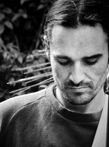
Anton Shekerjiev, musician

Born and raised in Bulgaria, Anton traveled extensively in Eastern and Western Europe playing music from the Balkans, and lived for several years in Spain performing with masters of Bulgarian music. In 2001 he moved to the USA, and in Tucson formed the bands Balkan Spirit, Trite Muzikante, MoroMore and others, performing Mediterranean, Flamenco, Moroccan, Asian and other types of world music. Anton currently performs with the bands Gsol, Tarraf de Tucson, Mzekala and others playing tamboura, djura, guitar, and kaba gaida (bagpipe). He has recently graduated from the University of Arizona with a Bachelor of Fine Arts.

Paul Amiel ~ Musical Director

Paul Amiel, Musical Director

Paul is a multi-instrumentalist and ethnomusician focusing on Medieval, Turkish, Chinese, Japanese, Middle Eastern, and ancient music, having studied abroad with master musicians. He founded and performs with the Summer Thunder Chinese Music Ensemble, the traditional Japanese music duo Muso, and various Turkish/ Middle Eastern/Mediterranean ensembles such as Seyyah and Zambuka. Paul has performed on harp, flute, saz, ney, dulcimer, and shakuhachi for groups such as Musica Sonora and the Arizona Early Music Society, as well as in many Rogue productions, including The DecameronThe TempestOur TownOthello, Immortal LongingsOrlandoEndymionThe Dead and on the recent Rogue Album CD. Paul was Music Director for this season’s As I Lay Dying at The Rogue.

Dawn Sellers ~ Musical Director

Dawn Sellers, Musical Director

Dawn performed in The Rogue’s production of Shipwrecked! and Our Town, was Assistant Director for Naga Mandala, Assistant Director and pianist for Ghosts, and Music Director for The TempestOld Times, Major BarbaraShipwrecked! and The New Electric Ballroom. Dawn was a pianist, composer and educator prior to receiving an MFA in dramatic writing from Carnegie Mellon University. She has composed music for Off-Broadway and is published by Hal Leonard, Alfred and Kjos Music Publishers. In Tucson, her plays have been produced by This Side Up Productions, Beowulf Alley Theatre Company, Live Theatre Workshop, and Live Theatre Workshop’s Etcetera series, as well as The Arizona Women’s Theatre. She is also listed on nytheatre.com, which features emerging women playwrights.

Clint Bryson ~ Lighting Designer

Clint Bryson, Lighting Designer

Clint has designed lights for nearly every Rogue Theatre production. Other lighting design credits include As Bees in Honey Drown and Golf Game for Borderlands, Woman in Black for Beowulf Alley, and The Seagull for Tucson Art Theatre. Clint is currently the Shop Foreman, Production Technical Director and Marketing Director for Catalina Foothills Theatre Department where he designs and coordinates the construction of all scenery. He is also a member of Rhino Staging Services, and a regular participant in Arizona Theatre Company’s Summer on Stage program where he designs and builds the scenery as well as teaches production classes.

Cynthia Meier ~ Director/Costumes

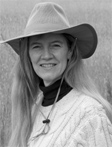
Cynthia Meier, Director

Cynthia is the Managing and Associate Artistic Director for The Rogue Theatre for which she has adapted and directed James Joyce’s The Dead, directed Shipwrecked!, New-Found-LandOld TimesThe TempestNāga MandalaThe Four of UsOthelloAnimal Farm,OrlandoHappy DaysThe Good Woman of SetzuanThe Fever and The Cherry Orchard. She also directed The Seagull (featuring Ken Ruta) for Tucson Art Theatre. For Chamber Music Plus Southwest, she has directed Talia Shire in Sister Mendelssohn and Edward Herrmann inBeloved Brahms. Cynthia has performed in many Rogue Theatre productions including The Goat, for which she received the Arizona Daily Star’s 2008 Mac Award for Best Actress. Sha has also performed in Cat on a Hot Tin Roof (Arizona Repertory Theatre), A Streetcar Named Desire (Arizona Theatre Company), Blithe Spirit and A Midsummer Night’s Dream (Michigan Repertory Theatre), Romeo & Juliet and Chicago Milagro (Borderlands Theatre), A Namib Spring (1999 National Play Award winner), and Smirnova’s BirthdayThe Midnight Caller, and The Ballad of the Sad Cafe (Tucson Art Theatre). Cynthia holds a Ph.D. in Performance Studies from the University of Arizona.

Dylan Page ~ Mopsa & Others

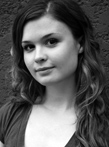
 Dylan Page ~ Mopsa & Others

Dylan is currently a Studio Art and Anthropology student at the University of Arizona.  She has performed with The Rogue Theatre as Dewey Dell in As I Lay Dying, Jenny Hill in Major Barbara and Felicity Cunningham in  The Real Inspector Hound.  Her other recent credits include Flaminia in Commedia dell’Arte Day with the Illegitimate Theatre Ensemble, Janice in Member of the Wedding (Arizona Onstage Productions), and Evelyn in The Shape of Things (Arizona Repertory Theatre).